
What is Metal Blanking?
Comments Off on What is Metal Blanking?Metal blanking is a manufacturing method used to cut flat shapes from sheet metal with speed and precision. The finished piece, known as the blank, is removed from the sheet and used as the final part or prepared for additional fabrication. This method is widely used for high-volume production because it delivers consistent results while reducing material waste and production time.
The blanking metal process plays an important role in industries that require accurate, repeatable parts. From electrical components to automotive applications, manufacturers rely on this method to produce parts that meet strict dimensional requirements. Working with an experienced metal blanking supplier also helps companies maintain quality, production efficiency, and dependable delivery schedules.
Understanding How the Metal Blanking Process Works
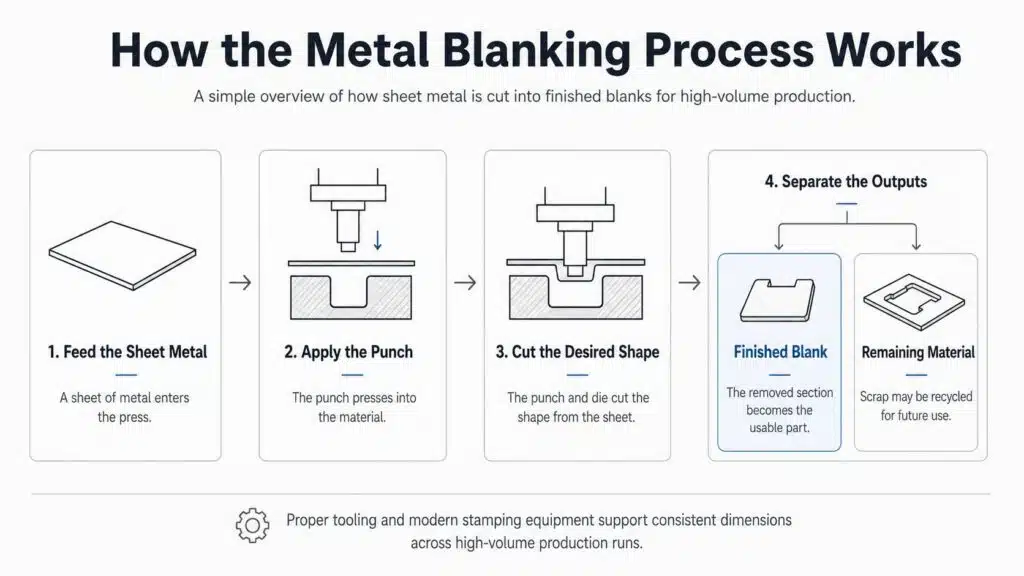
The process begins by feeding a sheet of metal into a press equipped with a punch and die. As the punch presses into the material, it cuts the desired shape cleanly from the surrounding sheet. The removed section becomes the finished blank, while the remaining material is considered scrap or recycled for future use.
The blanking metal process is valued because it creates parts with consistent dimensions from one production run to the next. With properly designed tooling and modern stamping equipment, manufacturers can produce thousands of identical components while keeping production costs under control.
Common Types of Metals Used for Blanking
Several materials are suitable for blanking, depending on the application and performance requirements.
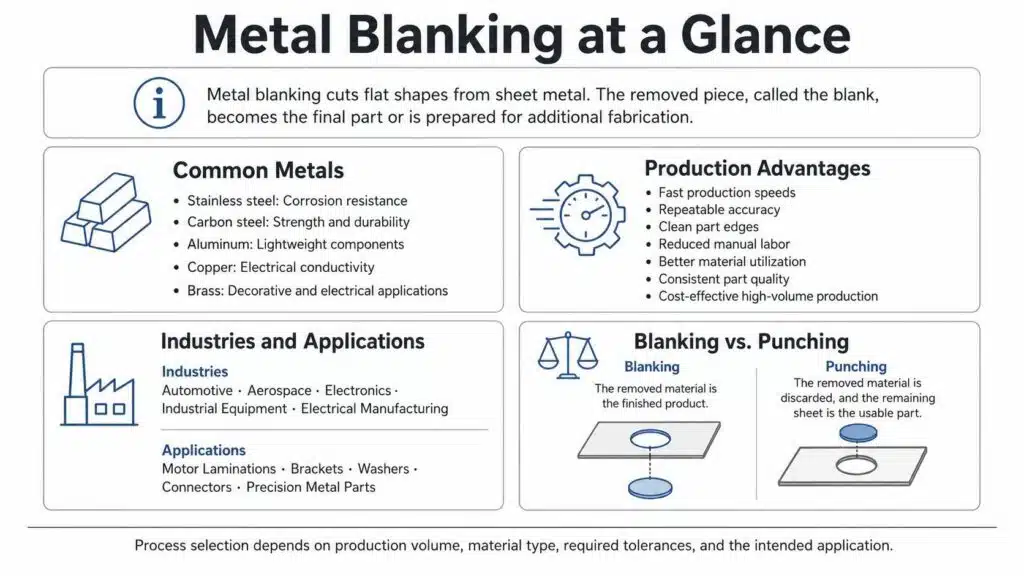
- Stainless steel for corrosion resistance
- Carbon steel for strength and durability
- Aluminum for lightweight components
- Copper for electrical conductivity
- Brass for decorative and electrical applications
Material selection affects the finished product’s performance, durability, and overall cost. Choosing the right material also supports efficient production and reliable long-term performance.
Advantages of Metal Blanking
Metal blanking offers several practical benefits for manufacturers producing large quantities of parts. It supports fast production speeds, repeatable accuracy, and clean part edges while reducing manual labor. Because tooling is built for repeated use, production becomes more efficient over time, making the process a cost-effective option for many industries.
Manufacturers also benefit from better material utilization and consistent part quality, helping reduce delays caused by rejected components or unnecessary rework.
Industries That Commonly Use Metal Blanking
Blanked components are found across many industries, including automotive, aerospace, electronics, industrial equipment, and electrical manufacturing. Common applications include motor laminations, brackets, washers, connectors, and various precision metal parts used in assemblies.
For companies producing high volumes of these components, precision and consistency directly affect product performance. Reliable blanking metal process services help keep production moving without sacrificing quality.
Metal Blanking vs. Other Metal Fabrication Processes
Metal blanking is often compared with punching, stamping, piercing, and laser cutting. The main difference is that the blank itself is the finished product. In punching, the removed material is discarded while the remaining sheet becomes the usable part.
Choosing the right process depends on production volume, material type, required tolerances, and the intended application. An experienced manufacturer can recommend the most efficient solution based on your project requirements.
Cut the Guesswork, Not the Quality
Selecting the right metal blanking supplier can have a direct impact on product quality, lead times, and production efficiency. This is where experience makes a difference. With decades of precision metal stamping expertise, LCS Company works closely with manufacturers to produce accurate, high-quality blanked components that meet exact specifications. From design support to production, partnering with a trusted manufacturer can help reduce unnecessary costs, improve part performance, and keep your project on schedule.
Contact LCS Company today to discuss your project and request a quote.